Assembly through fracture
Year
2022
Typology
Furniture
Info
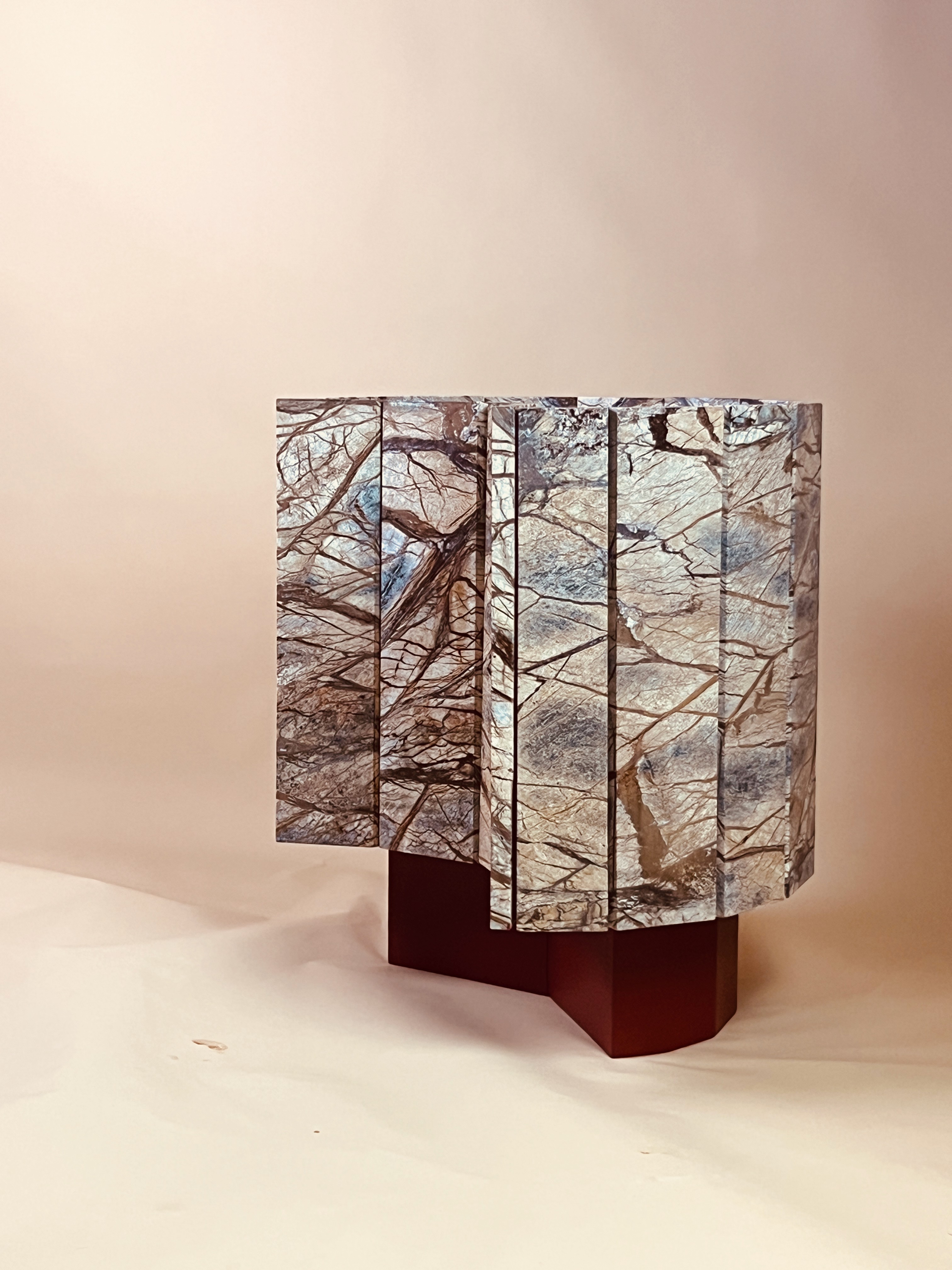
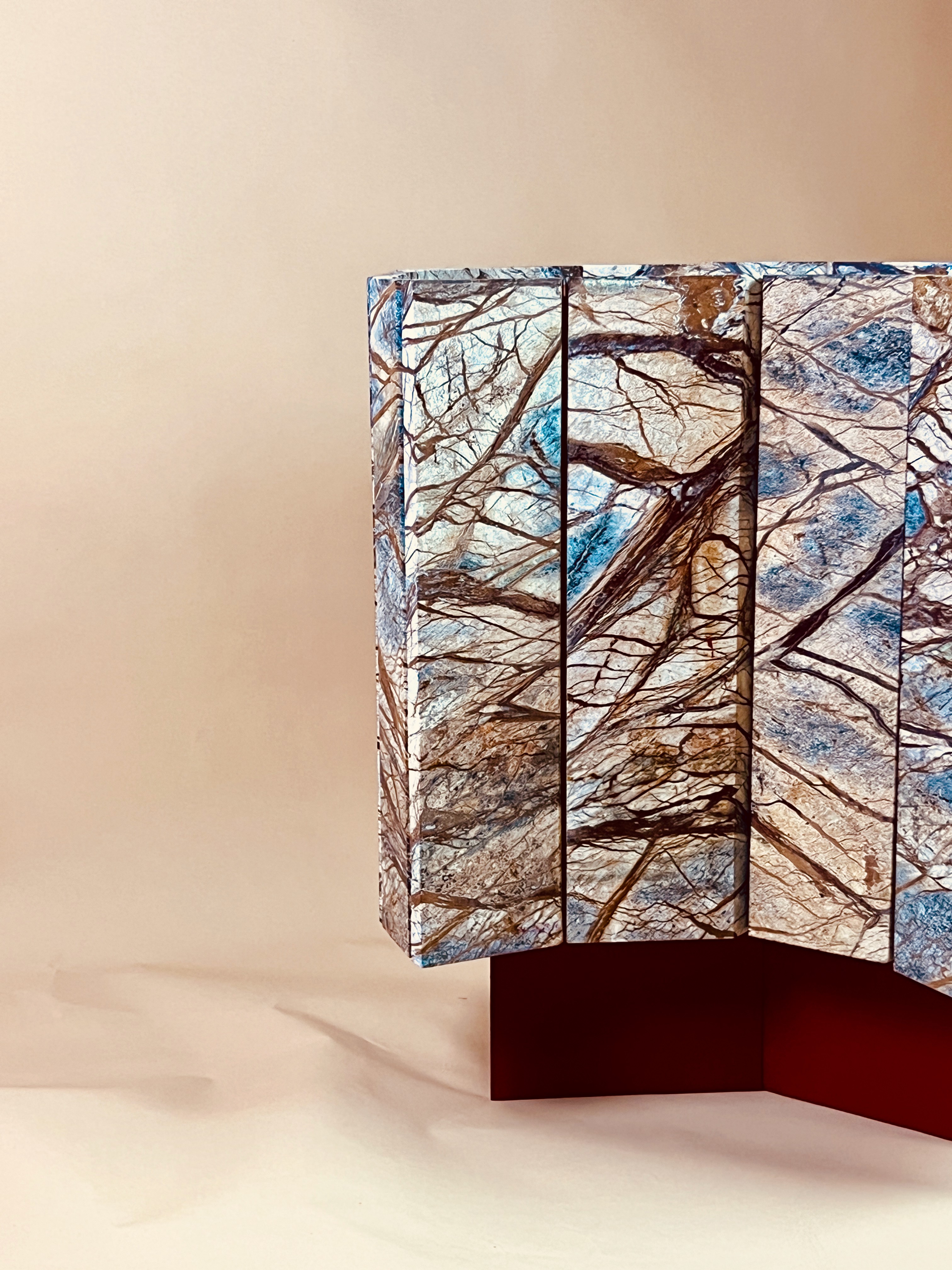
This piece began with material already considered waste. During visits to stone yards and fabrication shops, we noticed how often heavily veined marble slabs were discarded once cracked or broken, particularly softer stones that struggled to survive handling and transport. This slab had fractured into five separate pieces and been roughly reassembled, leaving it effectively unusable within conventional stone fabrication workflows.
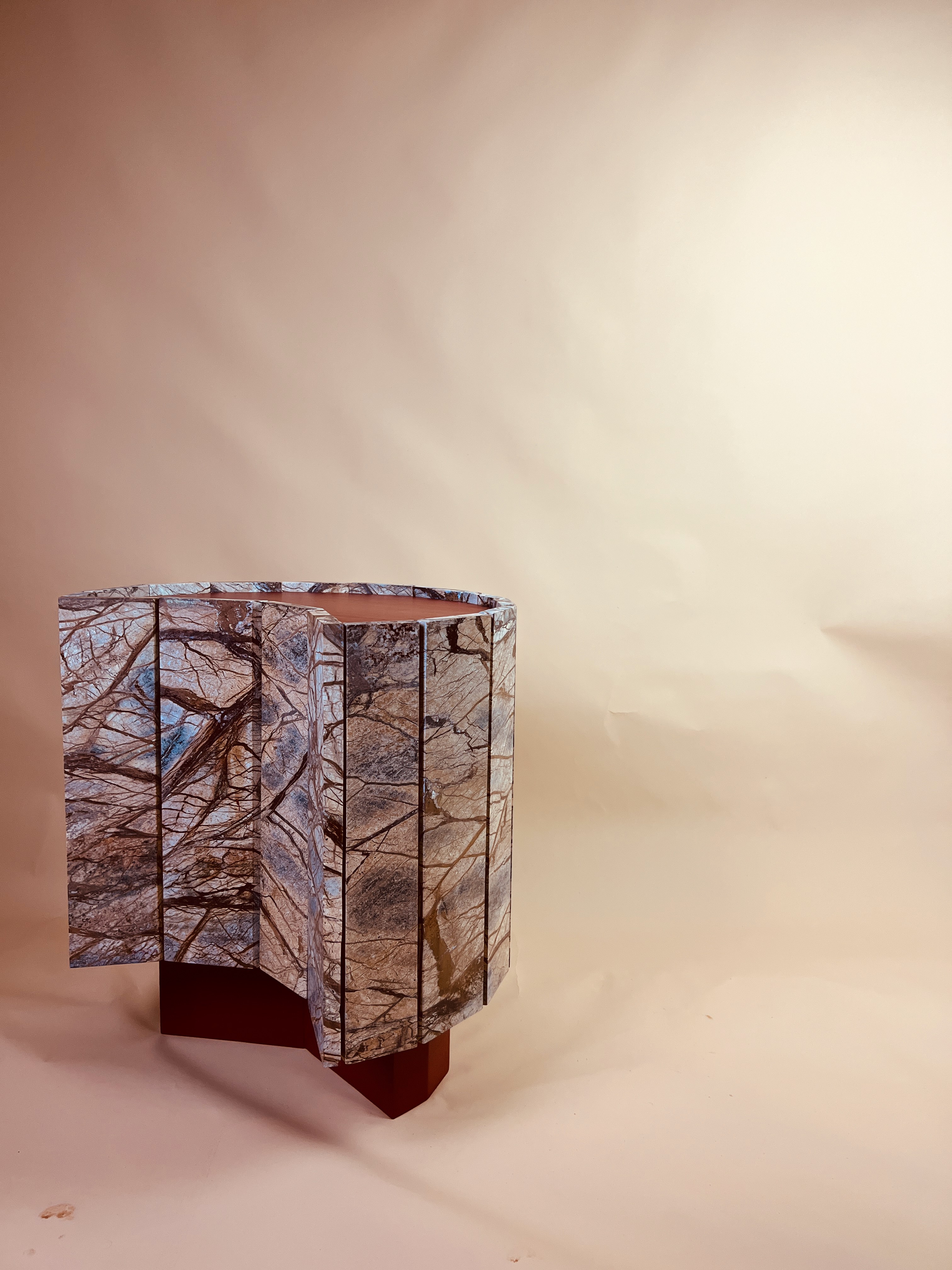
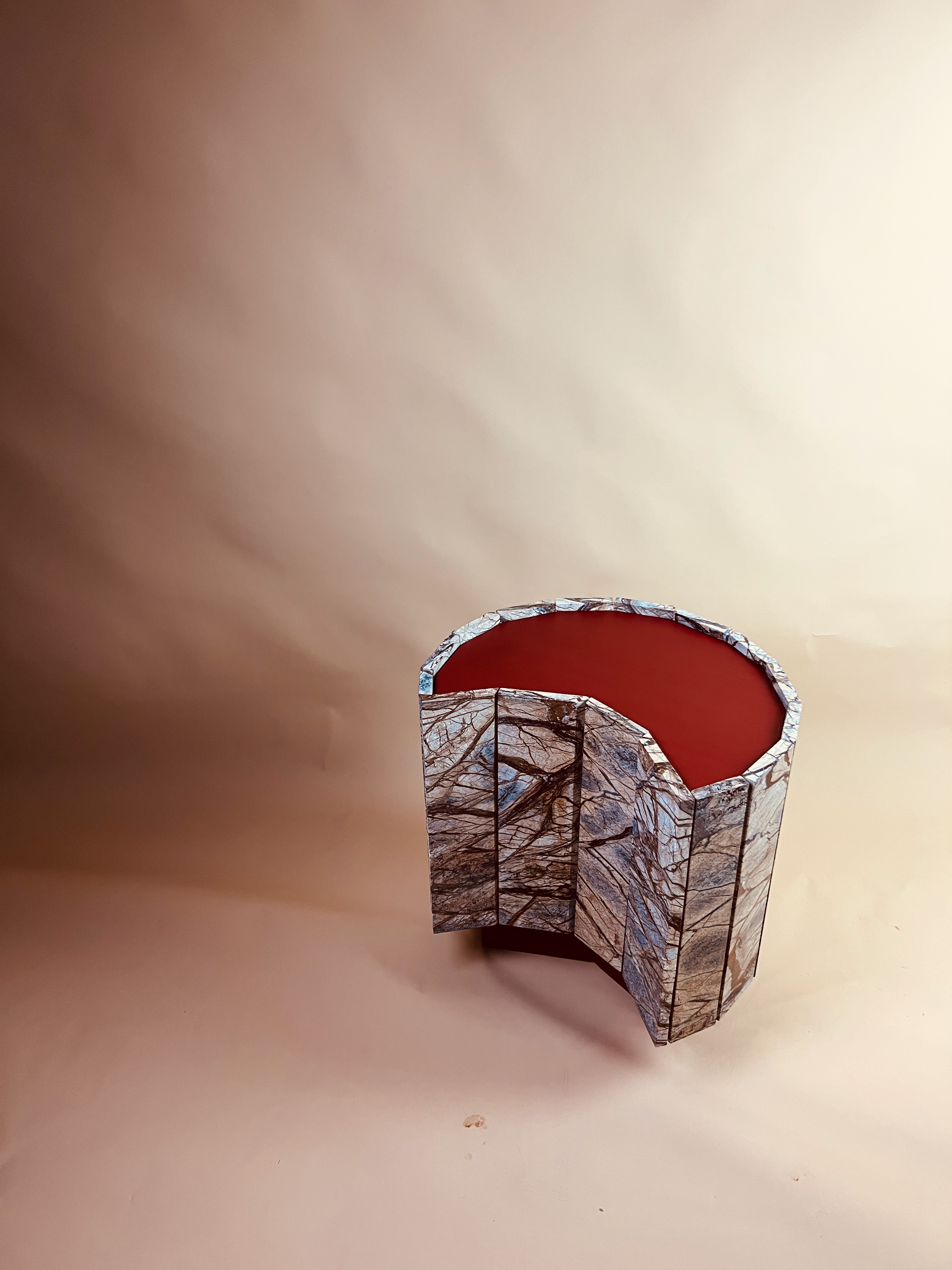
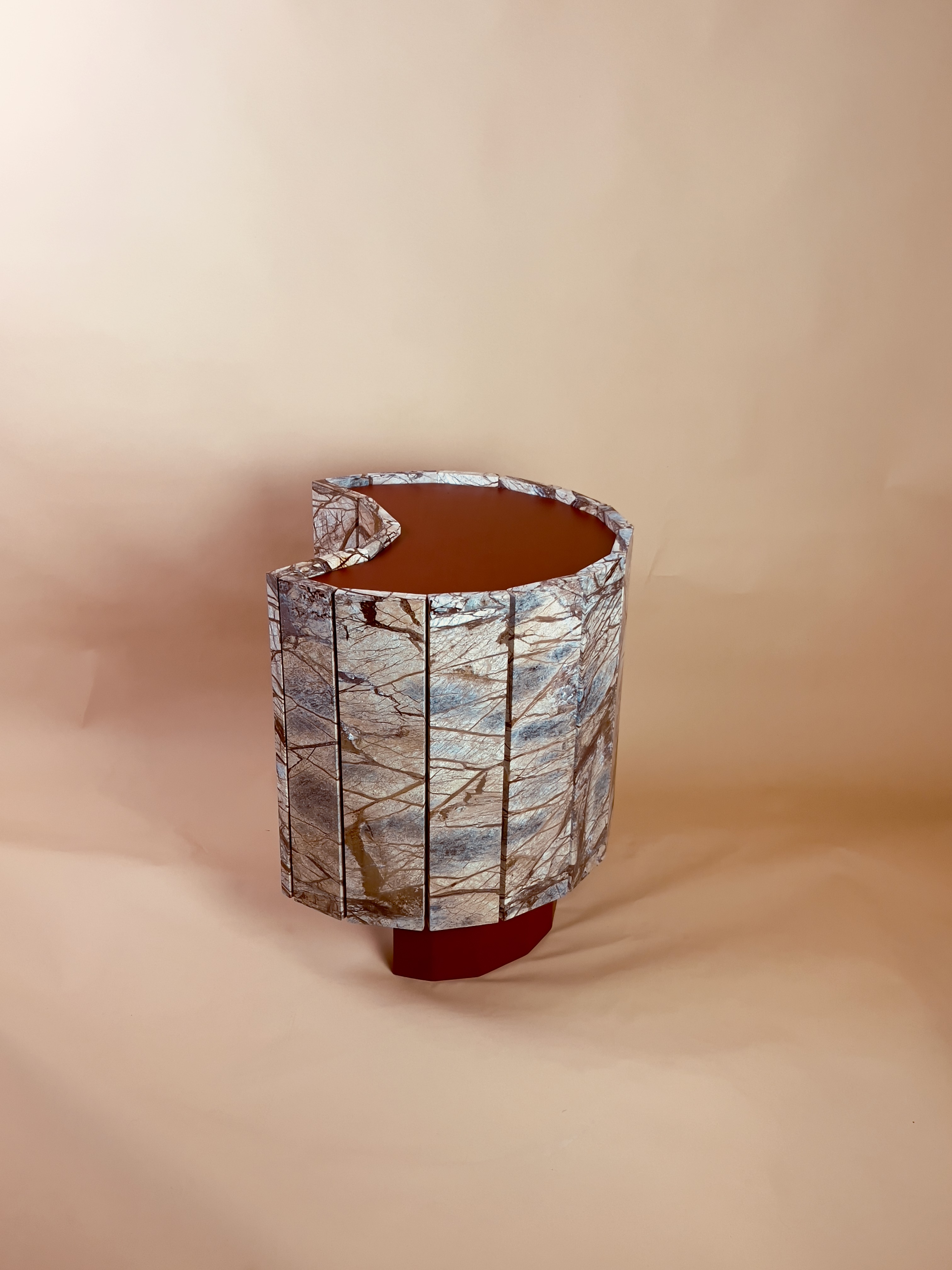
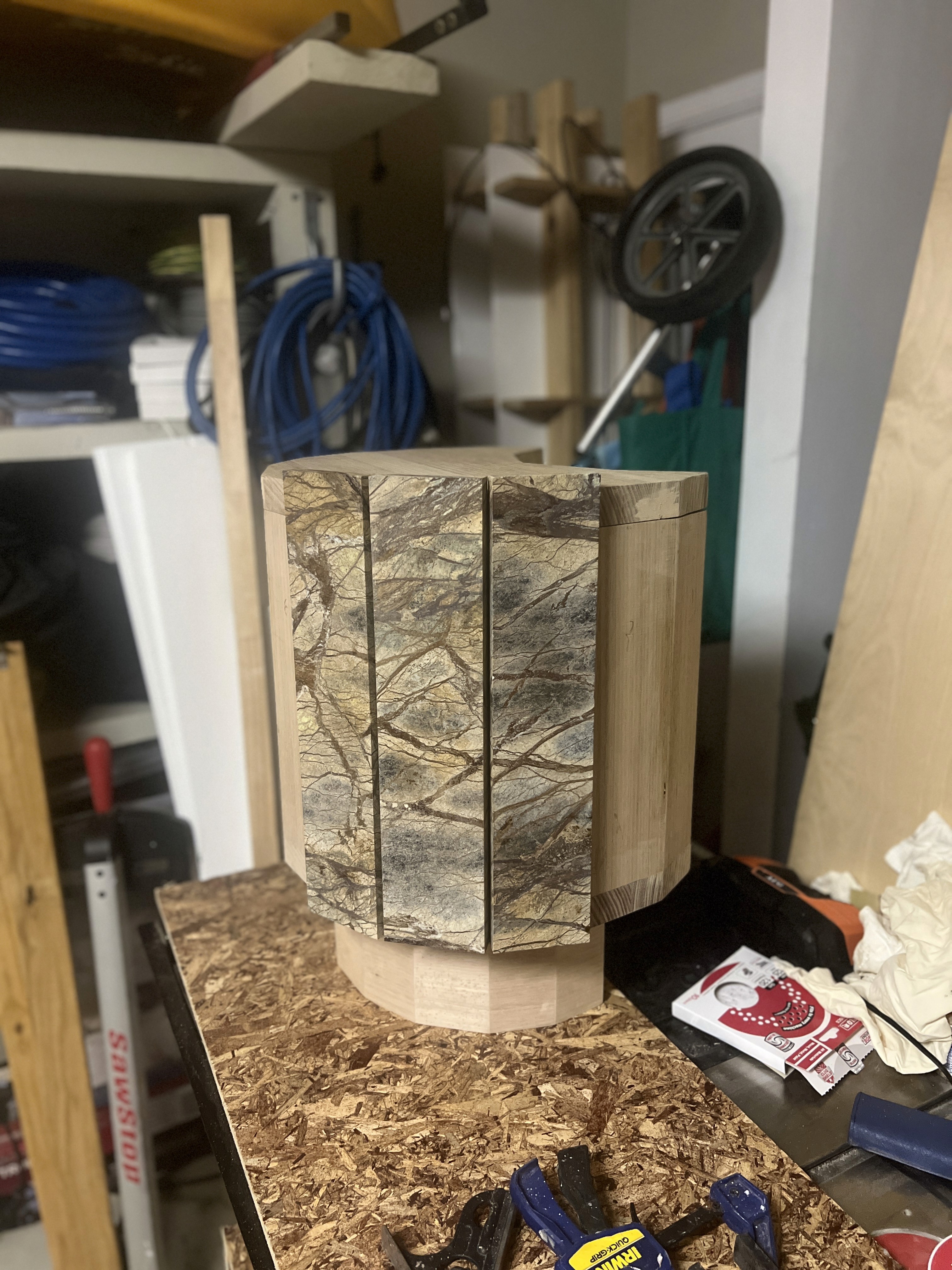
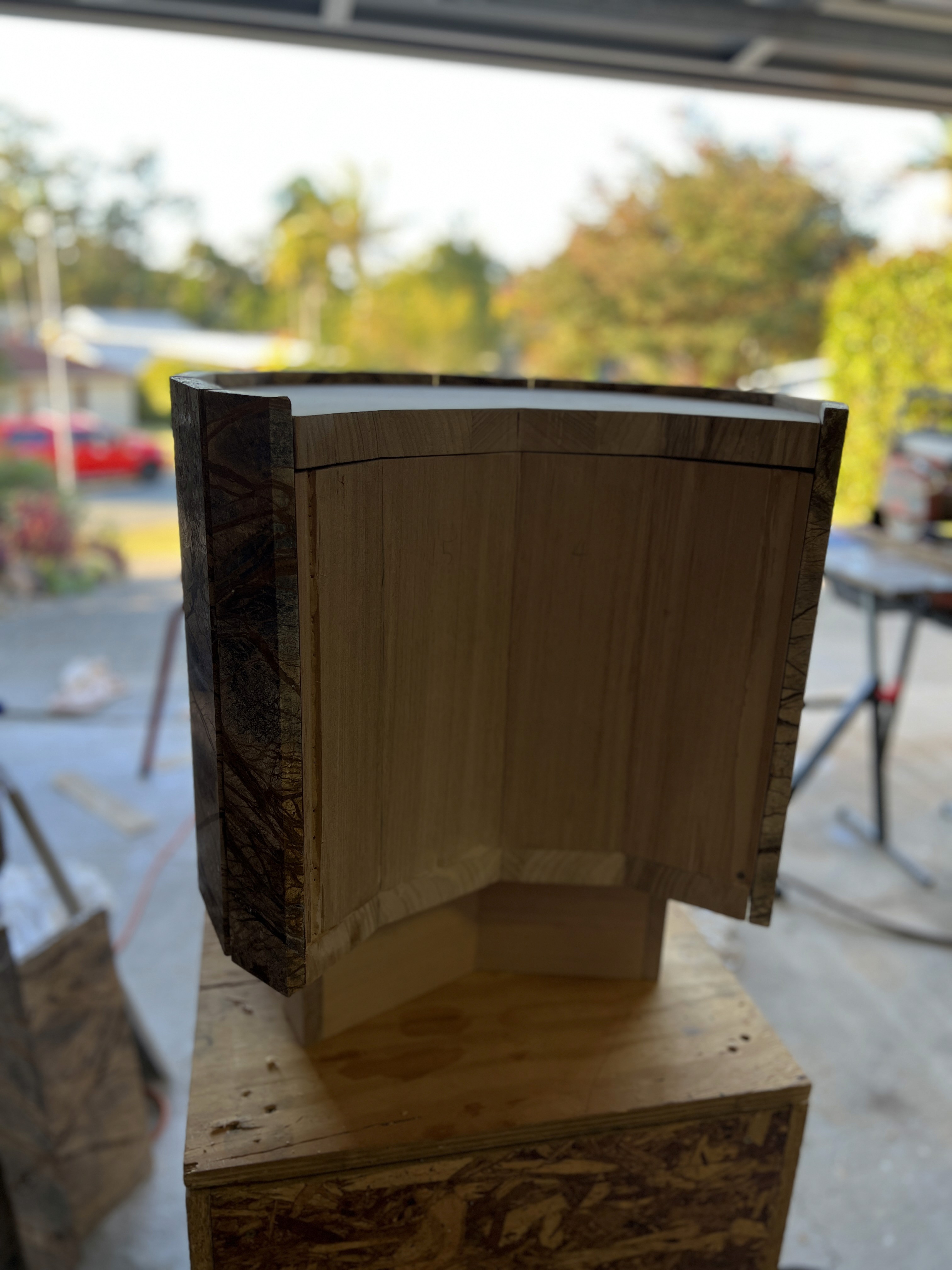
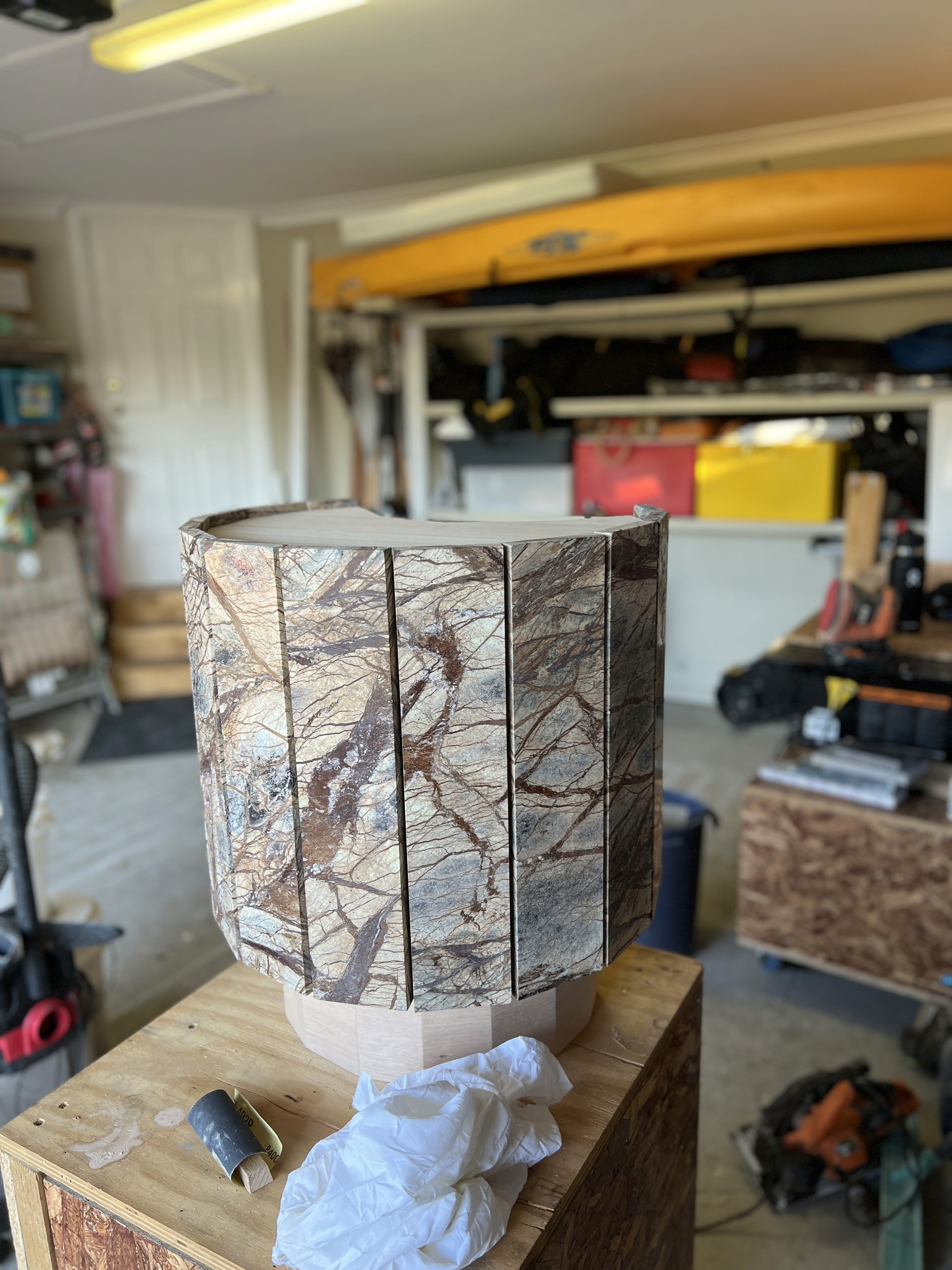
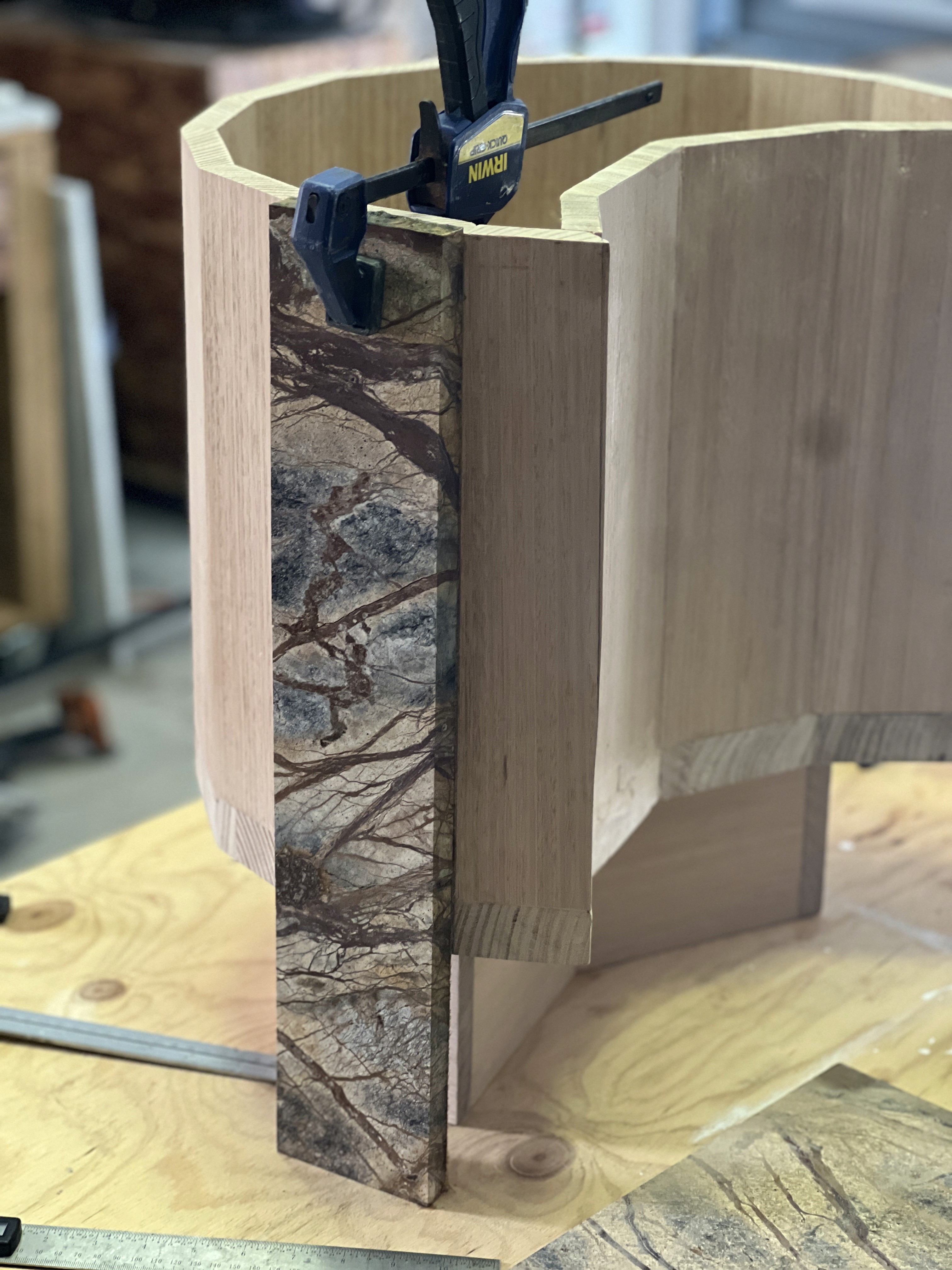
Rather than conceal the damage, the project works with it directly. The marble was recut into smaller, more stable sections and wrapped around a timber substructure, allowing the material to regain structural integrity through assembly rather than monolithic mass. Thin black shadow lines express each joint and reinforce the reading of the object as a collection of fragments held in tension.
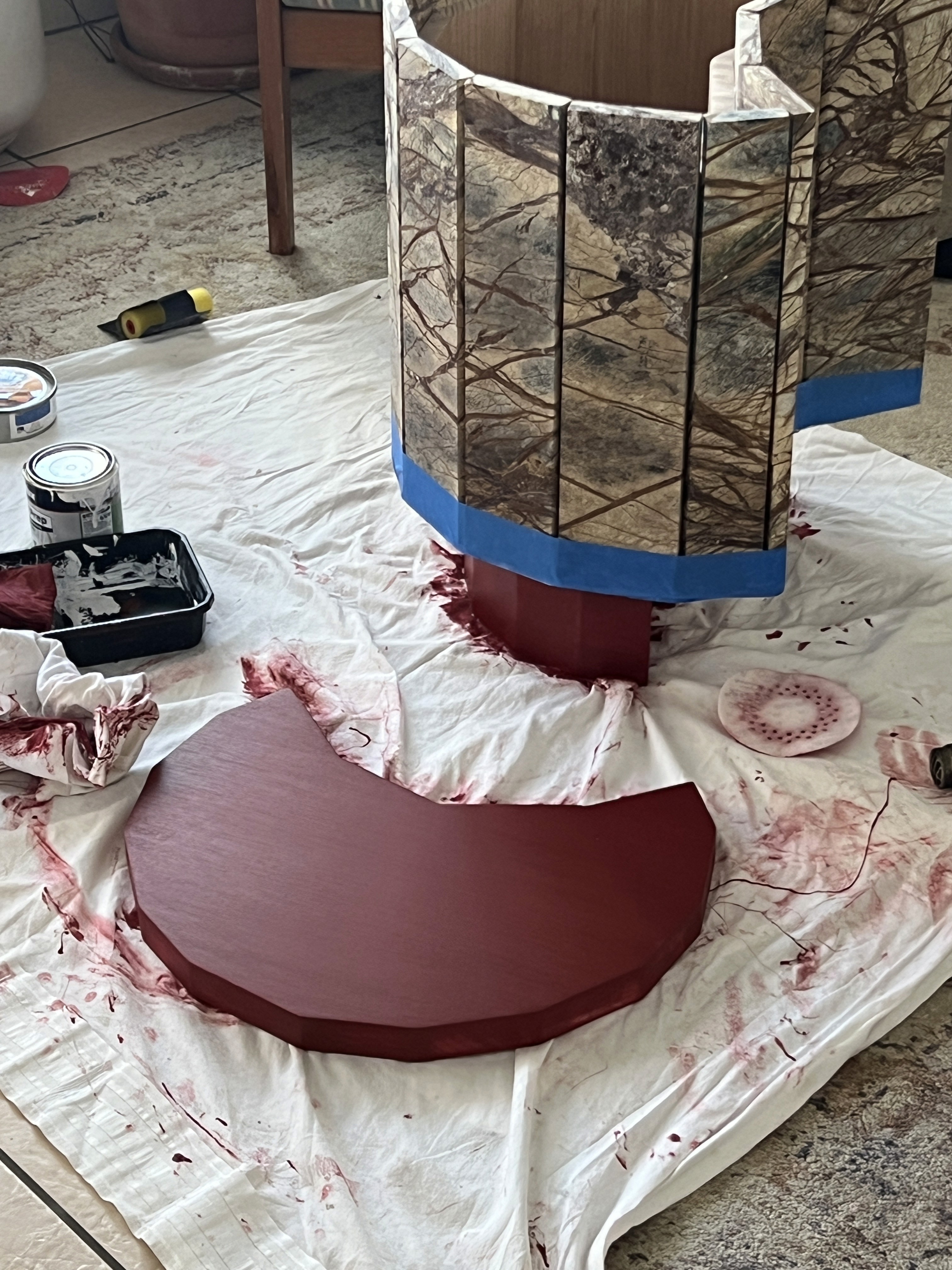
The form deliberately moves away from the rectilinear logic typically associated with stone furniture. A curved, crescent-like geometry softens the object and allows it to sit comfortably alongside domestic elements, sliding against sofas, beds, or lounge chairs. Internally, a deep red lining contrasts the cool, heavily figured stone exterior, giving the piece a more intimate and spatial quality.
The project reflects an ongoing interest in how damaged or irregular materials can be reinterpreted through precise construction logic, allowing waste material to become something deliberate, durable, and spatially expressive.