

Furniture as structure
Year
2020
Typology
Furniture
Info
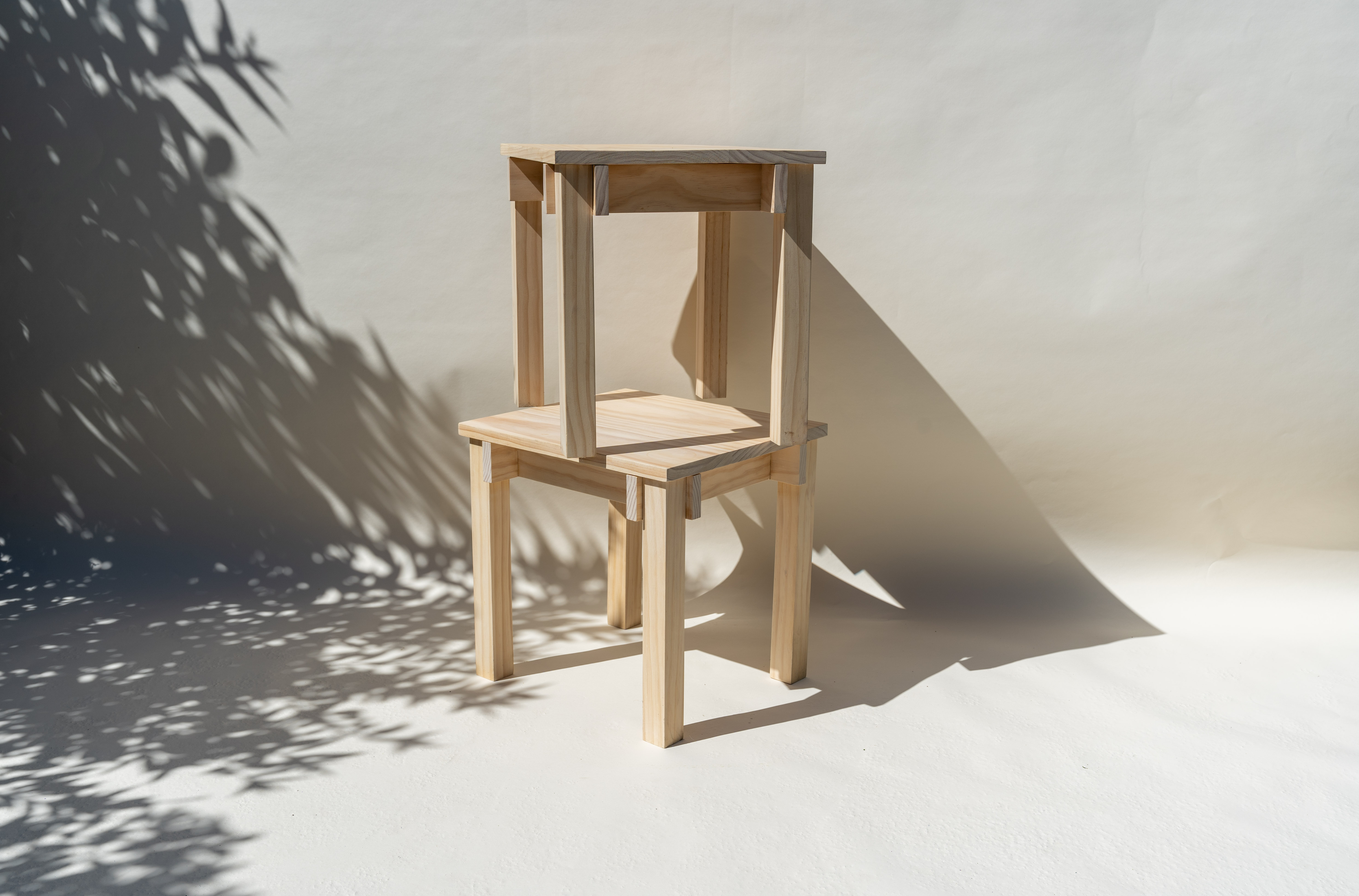
Joist began as an attempt to reduce furniture to a set of primary architectural moves. Rather than designing through form or styling, the focus shifted entirely to structure: what happens when a piece is composed using the same logic as a small building.
The legs act as posts, carrying load directly to the ground. Horizontal members tie the frame together as joists. The upper plane spans between them, read equally as seat, surface, or deck. Each element is expressed and legible, the construction does not conceal itself.
Connections are resolved through a slotted timber joinery technique, allowing the piece to be assembled and disassembled without hardware. This is not a practical afterthought but a direct extension of the design logic: if the object is structurally honest, the joint must be too.
The system scales without losing coherence. A single module operates as a stool or side table. Extended, it becomes a bench or dining table. The structural language remains constant across each variation, the object changes only in proportion.